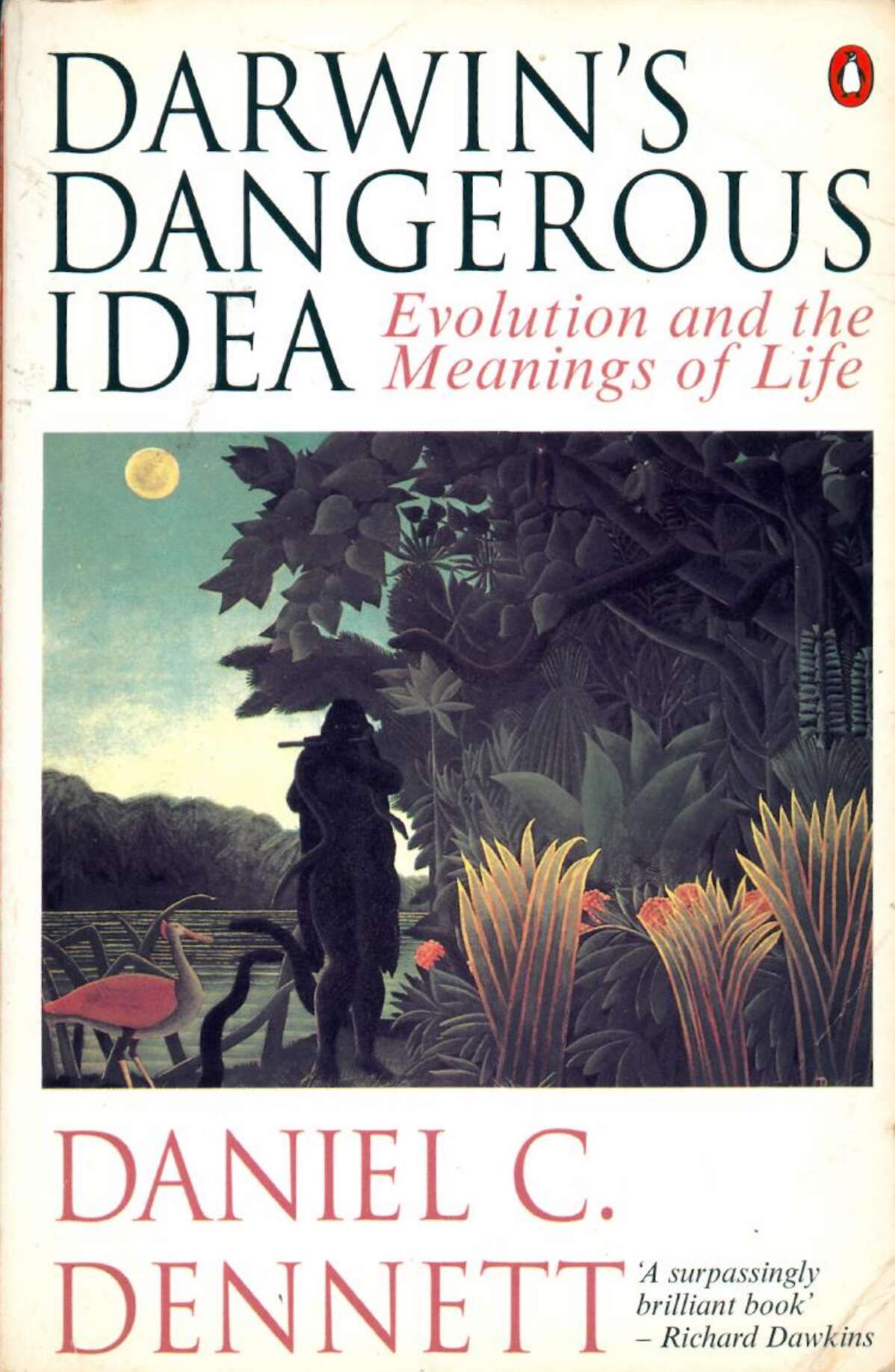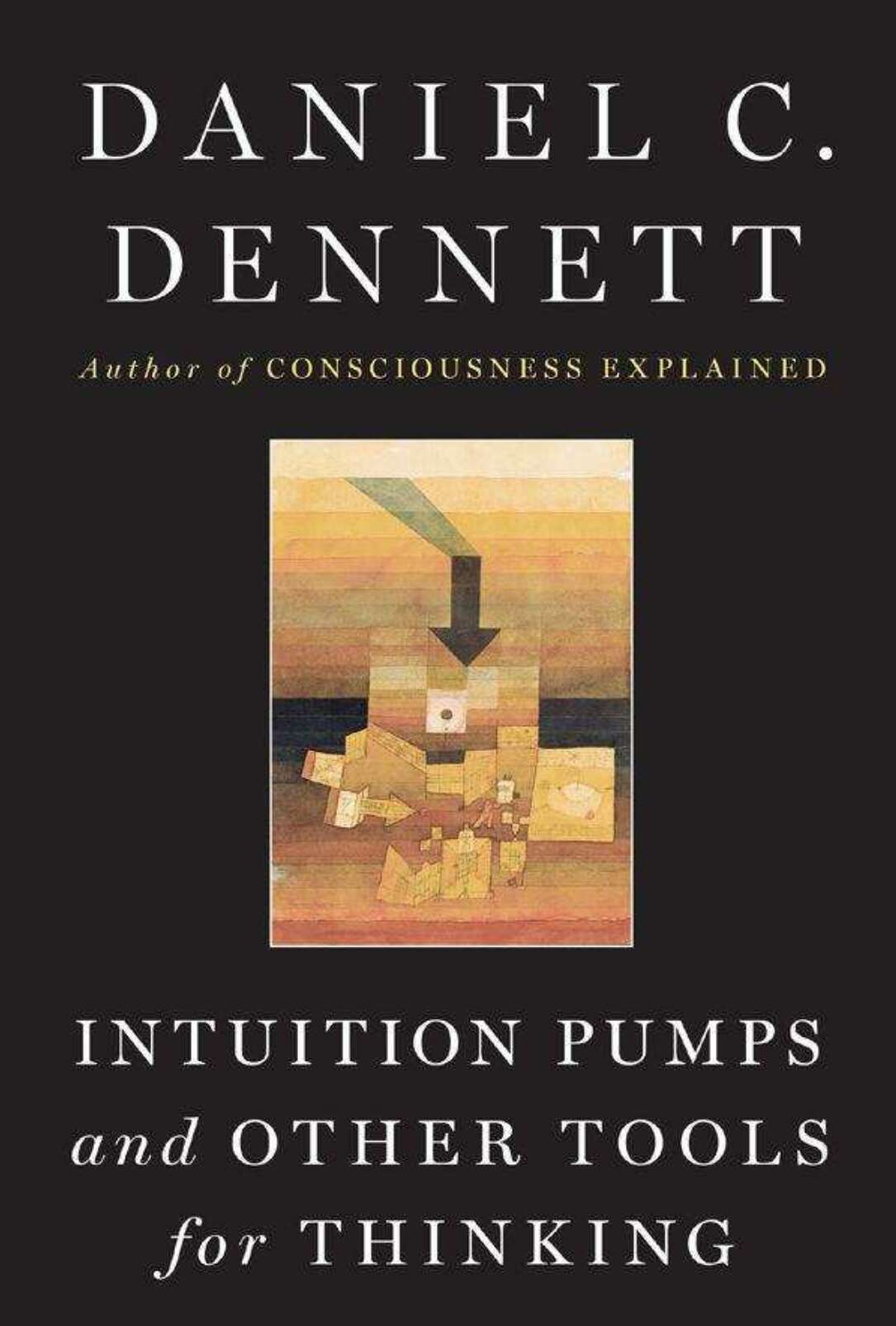
Intuition Pumps and Other Tools for Thinking
price: freeIntuition Pumps and Other Tools for Thinking
by Daniel Dennett
It is a thought-provoking guide designed to sharpen your reasoning and critical thinking skills. Dennett, one of the most influential contemporary philosophers, introduces readers to a set of mental tools he calls "intuition pumps" strategies that help simplify complex problems, reveal hidden assumptions, and avoid common cognitive traps.
This book is essential for anyone looking to improve their decision-making, reasoning, or analytical thinking. It is especially valuable for students, professionals, researchers, and lifelong learners who want a structured approach to navigating complicated ideas and enhancing intellectual clarity.
What Are Intuition Pumps?
Dennett defines "intuition pumps" as mental exercises or thought experiments that guide reasoning without dictating conclusions. These tools help you:
- Explore alternative perspectives without falling into error.
- Examine assumptions and biases that influence thinking.
- Break down complex concepts into understandable parts.
- Avoid common reasoning pitfalls in logic, philosophy, and everyday life.
Each chapter introduces multiple intuition pumps, accompanied by examples from science, philosophy, and real-world problem-solving. Readers learn to apply these strategies not only in academic or intellectual contexts but also in professional decision-making and personal judgment.
Why This Book Matters
Critical thinking is not innate; it requires practice and structure. Dennett's work provides:
- Practical Mental Exercises: Every tool can be applied immediately to problems you face.
- Clarity in Complex Ideas: Concepts in philosophy, science, and reasoning are presented clearly, making them accessible to all readers.
- Problem-Solving Frameworks: Learn systematic approaches to tackle challenges logically.
- Cognitive Awareness: Recognize biases, flawed assumptions, and misleading intuitions.
Unlike traditional philosophy books, this work emphasizes actionable thinking strategies. It's a manual for thinking better, not just reading about philosophy.
Key Themes and Tools in the Book
Some of the essential tools covered in the book include:
- Cognitive Bias Checks: Identifying systematic errors in your own thinking.
- Reductive Analysis: Breaking down problems into simpler components to avoid mental overload.
- Counterexamples: Learning to find examples that challenge assumptions and refine understanding.
- Creative Reframing: Shifting perspectives to find innovative solutions.
- Thought Experiments: Classic mental exercises to explore hypothetical scenarios and test intuitions.
Each chapter builds on the previous one, gradually equipping the reader with a full toolkit for reasoning in any context.
Who Should Read This Book?
This book is suitable for:
- Students and Academics: Enhance logical reasoning, argument analysis, and understanding of philosophical concepts.
- Lifelong Learners: Improve mental clarity and reasoning skills for personal growth.
- Anyone Interested in Philosophy and Psychology: Dennett combines philosophy, cognitive science, and humor to make difficult concepts digestible.
- Professionals: Apply structured thinking to decision-making, planning, and problem-solving.
Benefits of Reading Intuition Pumps
By reading this book, you can expect to:
- Think more clearly and make better decisions.
- Apply reasoning tools to personal and professional problems.
- Gain insights into human cognition and the mechanics of thought.
- Recognize flawed arguments in media, academia, or everyday discussions.
Dennett's approachable writing style ensures that even complex ideas are accessible without losing depth.
Part 1: Thinking Techniques and Intuition Pumps
What Are Intuition Pumps? These are powerful metaphors and thought experiments that serve as techniques for problem-solving, decision-making, and argumentation.
Key Techniques Include:
- Making Mistakes - Embracing errors as learning opportunities
- Reductio ad Absurdum - Taking arguments to their logical extreme to expose flaws
- Sturgeon's Law - Recognizing that "90% of everything is crud"
- Occam's Razor - Preferring simpler explanations over complex ones
- Rapoport's Rules - Guidelines for constructive criticism and fair argumentation
Communication Pitfalls to Avoid:
- Excessive jargon that obscures meaning
- Contradictions that undermine arguments
- Over-reliance on rhetorical questions
Part 2: The Philosophy of Meaning
The Meaning Challenge Understanding meaning distinguishes humans from animals, yet remains one of our toughest cognitive challenges. Clear definitions and starting points are essential.
Manifest vs. Scientific Image:
- Manifest Image - How we perceive the world through culture, grammar, and everyday experience. This isn't genetic but learned in childhood.
- Scientific Image - Knowledge of things we cannot directly perceive (electrons, atoms, quantum mechanics)
Both images are real and important. Philosophy helps us understand how they fit together, along with concepts like truth, poetry, and color.
The Concept of "Deepity" A deepity is a statement that appears profound by being ambiguous - seeming important and true on one level while being trivial or false on another.
Umwelt Every living thing, from amoebas to humans, has its own "umwelt" - the set of things in the world that matter to it. This includes both objective external realities and subjective inner experiences.
Part 3: Understanding the Human Mind
Collective Processing The human mind isn't a single entity but a collective system processing information as a whole. No single part of the body or brain acts alone.
Folk Psychology We naturally interpret others' actions through folk psychology - understanding people as unified agents with beliefs and desires, even though we're actually composed of many parts working together.
Internal Cooperation and Conflict Different aspects of our mind can cooperate or clash, but ultimately they contribute to our ability to make sense of the world.
Part 4: Evolution's Transformative Power
Darwin's Unifying Theory Evolution connects matter and meaning, transforming everything it touches. It challenges deeply held beliefs, which is why it faces resistance from those who retreat to absolutism.
The Genome as Library Think of DNA as a vast library of possible combinations. Nucleotides form patterns that distinguish each individual, like words composing unique stories.
The Tree of Life All living things share a common ancestry, connected through an unbroken line of descent back to life's origin.
Design Without a Designer The central debate between intelligent design and evolution hinges on whether design requires conscious intent. Evolution demonstrates that complex, functional biological systems arise through natural selection - endless experimentation producing reliable results without conscious planning.
Part 5: Demystifying Consciousness
Common Misconceptions:
- Consciousness isn't a single, unified phenomenon
- It's not a storage medium for information
- There's no "little man" (homunculus) in our head controlling things
- It's not unique to humans
What Consciousness Actually Is: Consciousness is intrinsically connected to how we process information. It serves as our "center of narrative gravity" - organizing experiences and determining actions.
The Turing Test Insight Alan Turing demonstrated that a machine could potentially pass for human without truly understanding consciousness, because what matters is functional behavior and the narrative organization of experience.
The Self While the conscious self isn't physically located anywhere specific, it undeniably exists at the core of our personal narratives.
Part 6: The Reality of Free Will
Debunking the Myths Many brilliant thinkers have dismissed free will as an illusion, but this conclusion stems from misunderstanding what free will actually is.
What Free Will Really Is: Free will exists, but not in the metaphysical, supernatural sense often imagined. Instead, it:
- Works in alignment with brain function
- Is compatible with scientific understanding
- Doesn't require special metaphysical claims
- Functions within the natural laws of cause and effect
The key is abandoning folk ideology about free will and understanding it as a real phenomenon that emerges from our complex cognitive architecture.
Conclusion: Mastering the Art of Thinking
Dennett equips readers with an arsenal of intellectual tools for:
- Making better decisions
- Arguing more ethically and effectively
- Understanding consciousness and human nature
- Navigating evolutionary thinking
- Grasping complex philosophical concepts
The Central Message: Thinking is an art requiring continuous practice and strategic use of tools. These intuition pumps and thinking techniques provide a foundation for finding your own solutions to sophisticated problems. By mastering these tools and avoiding common cognitive traps, you can sharpen your reasoning abilities and tackle life's most challenging questions with greater clarity and confidence.
category : Philosophy
related books